Welcome to Mi Wai Healthy, your destination for holistic health solutions and the renowned Tropical Sea Moss, a favorite among those seeking natural remedies!

Welcome to Healthy Eating
Eating healthy doesn't have to be boring, bland, or tasteless. We're here to change that!
Let's make healthy eating delicious, simple, affordable, and fun for the whole family—including our little ones. 💚
Because eating better shouldn't feel like a punishment. It should be something the whole family can enjoy.
starting where you are and making a little tweak.

Breakfast
Breakfast
Love pancakes? Keep enjoying them with a twist by trying a sea moss pancake recipe topped with fruit and your favorite syrup. These pancakes are not only delicious but also fit perfectly into your healthy recipes and align with grocery shopping tips for nutritious meals. Plus, this simple cooking strategy will enhance your breakfast routine.
Snack
Breakfast
Do you have little ones who adore popsicles? Consider making homemade sea moss fruit popsicles as a delicious and healthy recipe for a fun frozen treat. This delightful snack is a fantastic way to introduce nutritious sea moss recipes into their diet, while also aligning with simple cooking strategies and effective grocery shopping tips.

Dinner
Dinner
Mac & cheese night? It can stay on the menu! With some grocery shopping tips, you can try a plant-based mac & cheese recipe and explore a fresh take on this family favorite. This simple cooking strategy not only provides healthy recipes but can also be modified to include sea moss recipes for an extra nutritional boost.
Grocery Swaps 1 on 1

Grocery Swap 1-on-1
Love pancakes? Keep enjoying them with a twist by trying a sea moss pancake recipe topped with fruit and your favorite syrup. These pancakes are not only delicious but also fit perfectly into your healthy recipes and align with grocery shopping tips for nutritious meals. Plus, this simple cooking strategy will enhance your breakfast routine.
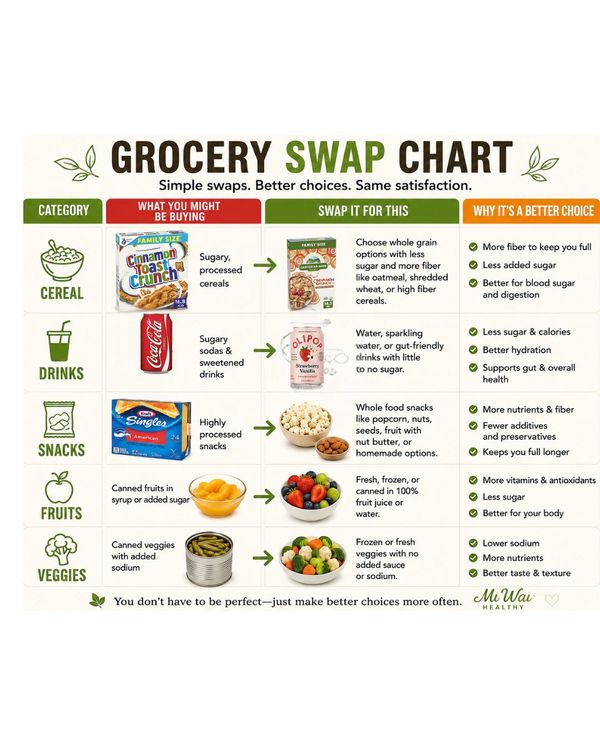
Grocery List
Do you have little ones who adore popsicles? Consider making homemade sea moss fruit popsicles as a delicious and healthy recipe for a fun frozen treat. This delightful snack is a fantastic way to introduce nutritious sea moss recipes into their diet, while also aligning with simple cooking strategies and effective grocery shopping tips.
🔍 Reading Food Labels: What's Really in Your Food?
Mac & cheese night? It can stay on the menu! With some grocery shopping tips, you can try a plant-based mac & cheese recipe and explore a fresh take on this family favorite. This simple cooking strategy not only provides healthy recipes but can also be modified to include sea moss recipes for an extra nutritional boost.

Health isn’t just physical. Your spiritual health matters
The Mi Wai Healthy Spiritual Health Guide was created to help you make spiritual wellness an intentional part of your overall health journey. The guide introduces spiritual health alongside physical and mental wellness and encourages readers to examine their connection with God.